
‘Data is the new oil’ – we have been hearing this phrase around for some time now. This is true. Let’s look at how this ‘oil’ is helping Amazon outperform experts with huge industry experience. Not just in an industry, but in any industry they get into.
This is an analysis looking at the power of data and the relevance of the new e-commerce proposal from a neutral standpoint.
A storm of the discussion happened a month back on the new rules of e-commerce, proposed by the Department of consumer affairs.
I understand that certain criticism was aimed at the lack of clarity of the proposal
We all have seen it, we have our opinion.

There are multiple clauses in the proposal. I’m just focusing on just two of them.
Also, I’m taking Amazon’s case here. Flipkart and other major players won’t be any different.
- E-tailers shouldn’t permit usage of their name for brands—if such practices amount to unfair trade practices and impinge on the interests of consumers.
- E-tailers shouldn’t mislead users by manipulating search results
Now, let me tell you this first. I have been using Amazon for shopping and entertainment for quite some time. And I love their services.
When the proposal was announced, I heard a lot of criticism from multiple corners, including industry veterans and experts.
As per an article on Business Insider(2018 data), Amazon owns many private-label brands. Amazon may own as many as 80 of the brands it carries, and according to Quartz, it has applied for more than 800 trademarks.
This is the data based on the US market, but the case is similar in India too.
Let’s take a scenario.
Amazon has the data of the consumers, and they own it.
They can pull up the data of any brand in any niche in any country that’s having momentum. And they just can replicate the product and sell it under their private-label brand. They can analyze the seller reviews and tailor their product accordingly.
Also remember, you’re playing on Amazon’s turf. It is an easy task for amazon to promote their brands and products over any other seller.
Amazon can choose to give huge offers to undercut its competitors.
They have been doing this for quite some time. It works 100%.
If you wonder, whether this can happen, let me show you an example.
We’re familiar with Lizol, the popular brand in the disinfectant and cleaning niche.
This is owned by an England-based Reckitt Benckiser.
These are some example comparisons.
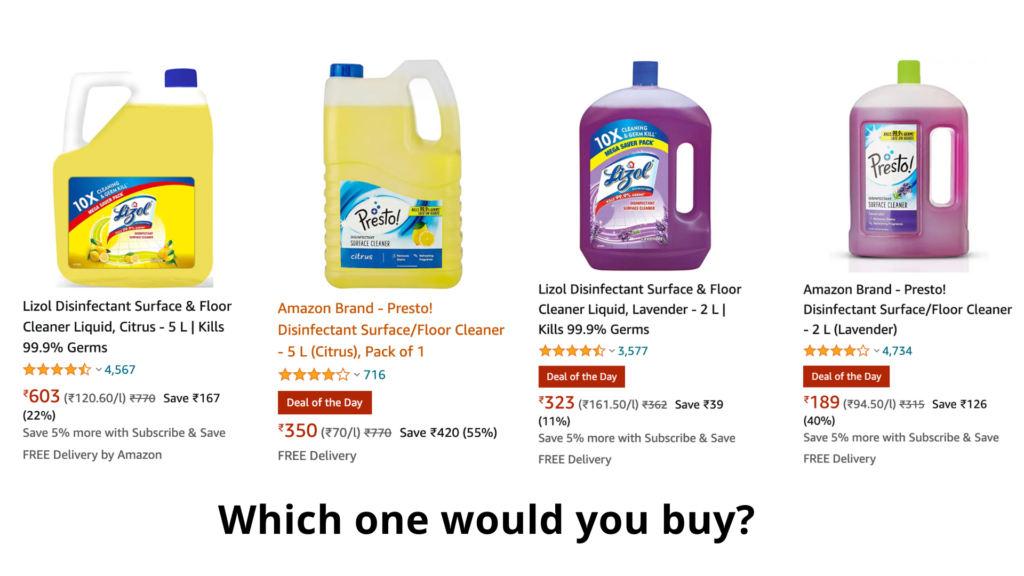
Again, check this one out as well.
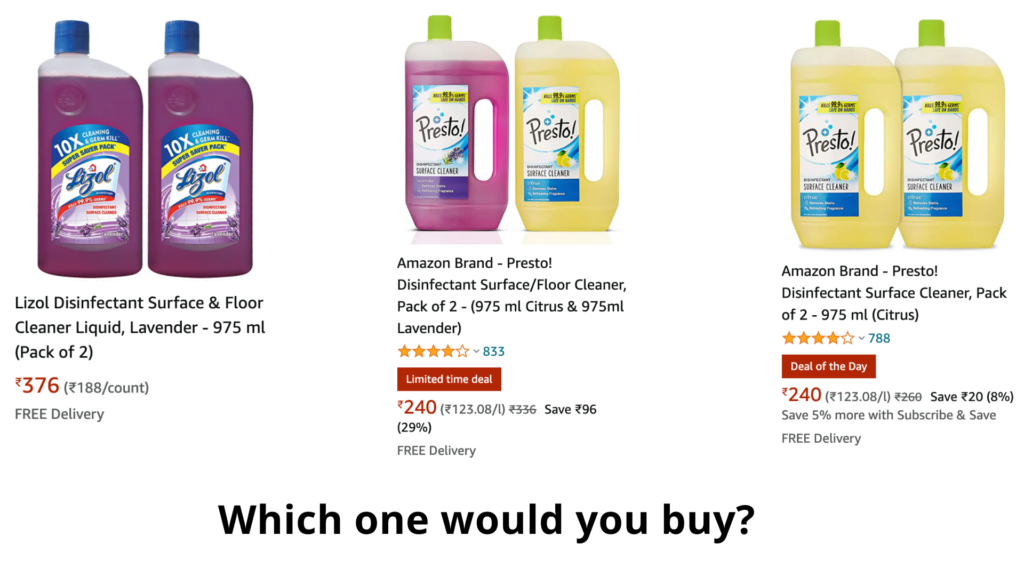
I just have one simple question.
Which brand would you prefer if you have to choose between these two?
In a price-conscious market like India, we all know what most of us would prefer.
Even if you still went with Lizol, that’s fine.
We have our reviews to support our doubts.
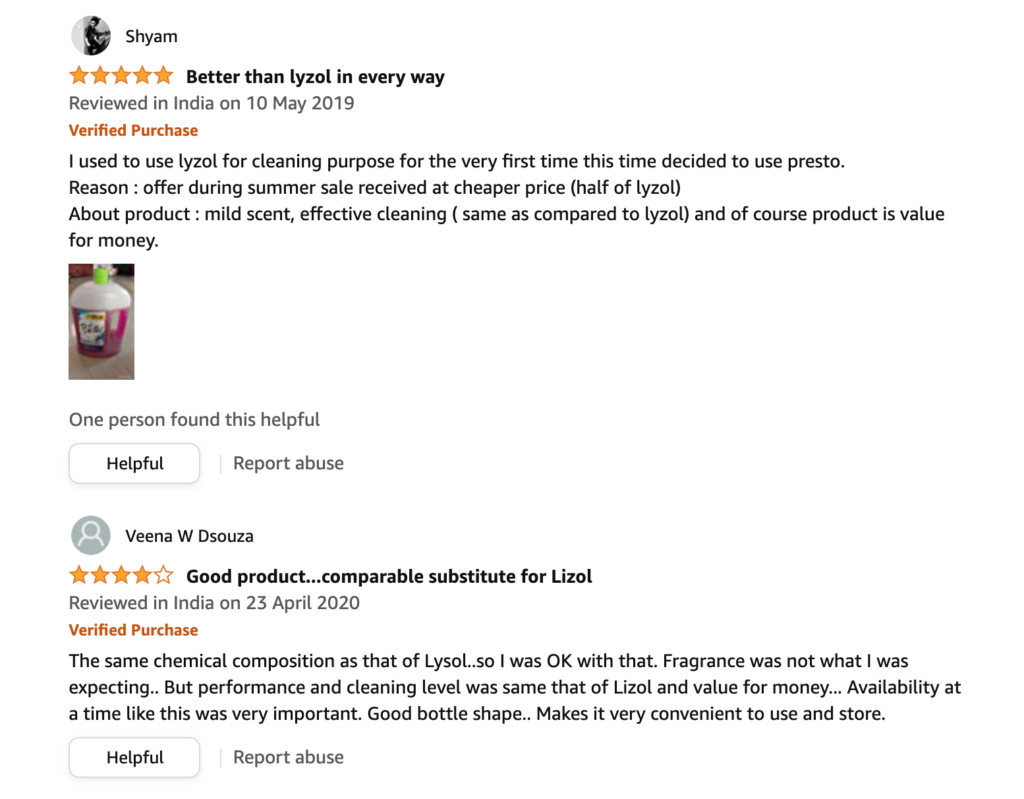
Consumers are aware of this fact, so this is what a giant can do when other brands have to sell on Amazon’s marketplace.
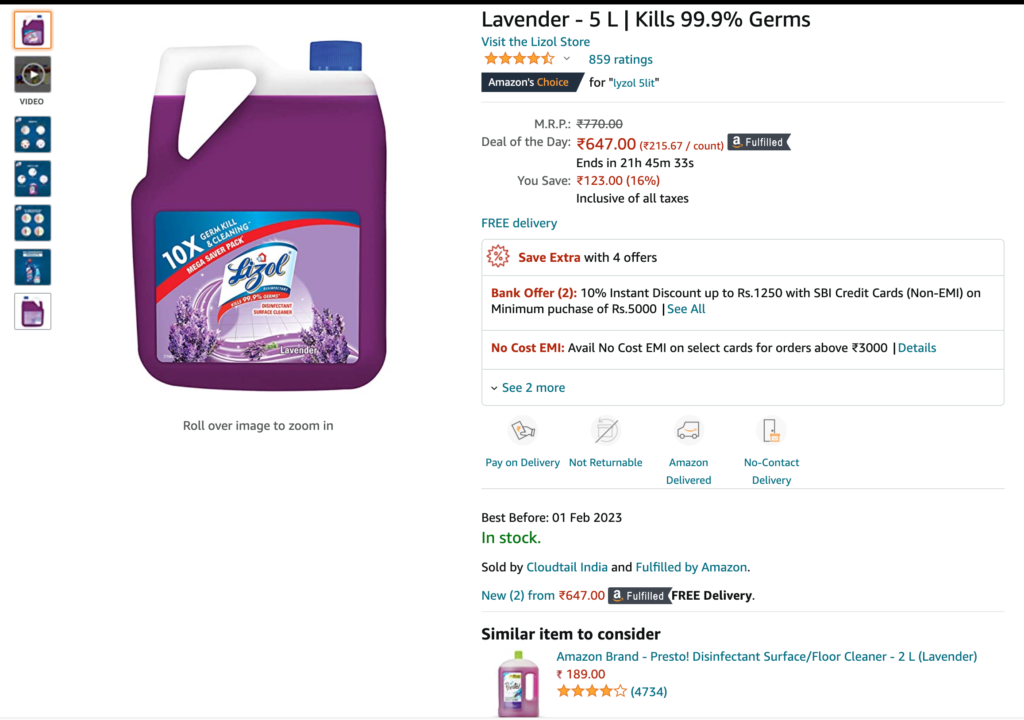
Also, if you search for Lizol specifically, see who comes as the ‘similar item to consider’.
I love Amazon’s services from a customer standpoint.
What would all customers like?
Quality products at bargain prices.
But, the proposal was all about bringing fairness into the online shopping space.
If popular international brands, that sell on major marketplaces can’t compete with Amazon, just think about the brick-and-mortar stores that we see around.
Amazon can move into any niche that’s gaining momentum at any given moment.
Amazon can become a monopoly in retail if this process continues.
Disruption is good, innovation is necessary. User experience and convenience are great. Along with that, we have to have measures to curb unfair practices.
What’s the solution?
E-commerce is a comparatively newer industry, hence any rules in this segment need expert advice. We have a lot of it in the Indian market.
I’m sure we can reach a fine line to promote fair practices where customers and sellers win together.
I’ll rest my case here.
Disclaimer: This perspective is purely the author’s opinion. This doesn’t have any relation to the role or practice the author is currently in.
Leave a Reply